Make Your Chores Activity
Each one opens in a new tab, ready to print.
Words used in these worksheets (20)
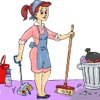 clean up
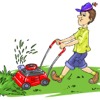 cut the grass
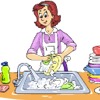 do the dishes
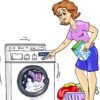 do the laundry
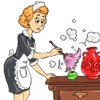 dust
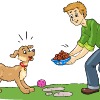 feed the dog
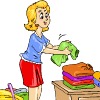 fold the laundry
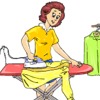 iron the laundry
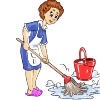 mop the floor
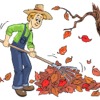 rake the leaves
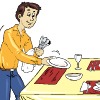 set the table
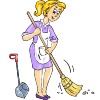 sweep the floor
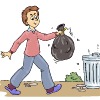 take out the trash
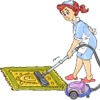 vacuum
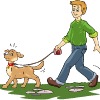 walk the dog
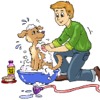 wash the dog
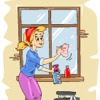 wash the windows
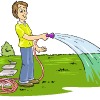 water the grass
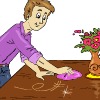 wipe the table
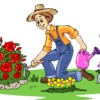 work in the garden
Need different words? Remove words or add more from the full Chores set. Your saved custom list is not changed.
More quick worksheets and games
I use this set to introduce "have to" and "don't have to": "I have to do the dishes." "I don't have to take out the trash."
I present "have to" as their job. I ask whether someone at home tells them to do these things, then point out that they "have to" do them. Most kids only do chores once in a while, so "sometimes" comes up naturally. It's also good to ask about other things they have to do, like go to school and do homework.
Useful phrases for Chores
Pair the vocabulary with one sentence pattern at a time. Each level builds on the one before.
Starting out
First lessons, once students know the words- I have to do the dishes.
- Do you have to walk the dog? Yes. / No.
- I don't have to take out the trash.
Next step
Building on the basics- I sometimes have to ___.
- My dad has to ___. My sister has to ___.
- Who does the laundry at your home?
Challenge
For older or more advanced students- I have to ___ before I can ___.
- Which chore do you like most? Which one do you like least?
- If I didn't have to do chores, I would ___.
Teaching tips for Chores
Make it about real life
Ask about what students actually do at home. Every family is different, so you get a natural mix of yes, no and sometimes.
Teach the whole phrase
Most chores are full phrases: take out the trash, rake the leaves. Teach them as chunks, and save the bingo and flashcards for younger students who aren't ready for long words in a puzzle.
Add frequency
Always, sometimes and never fit chores perfectly. "I always make my bed. I never wash the windows."
Keep it neutral
Chores are shared differently in every home. Talking about "someone at home" or "your family" keeps everyone included.
Chores lesson ideas
Chore chart
Students make a weekly chore chart for themselves or an imaginary family, then talk about it: "On Monday, I have to feed the dog."
Charades
A student mimes a chore and the class guesses: "Are you vacuuming?" It's quick, active and great for the -ing form.
Have to survey
Students ask classmates "Do you have to ___?" for five chores and report the most common one.
A chores week
Flashcards and charades on day 1, word search on day 2, chore charts on day 3, then bingo or the board game with "have to" to finish.
More Chores resources from MES
- Chores flashcards large cards, game cards and a handout
- Chores flashcards set 2 chores adults usually have to do
- Speaking First Curriculum: Unit 13 how chores fit into a full course
- Chores online games vocabulary practice for students
All Chores images (36)
Click a picture to add it to your worksheet list or take it out. Up to 30 words. Words in your list are shown first.
No images match your search.
Build once. Make everything.
Planning a full unit? The Custom List Maker lets you mix words from any category, save your list, and make 19 different worksheets and games from it all week long.